






Luxury Landscaping Insider
update
Luxury Landscaping Insider
update
  • Home
  • Categories
    • Trendsetters
    • Design Dialogues
    • Transformation Tales
    • DIY Luxe
    • Material Mastery
    • Budget to Bliss
    • Event Spotlight
    • Luxury Landscaping Blog
    • Product Reviews
SUBSCRIBE TO NEWSLETTER  
  • update
  • update
  • update
  • update
  • update
  • update
  • update
April 16.2025
2 Minutes Read

Cutting-Edge Excavator Attachments for Efficient Land Clearing

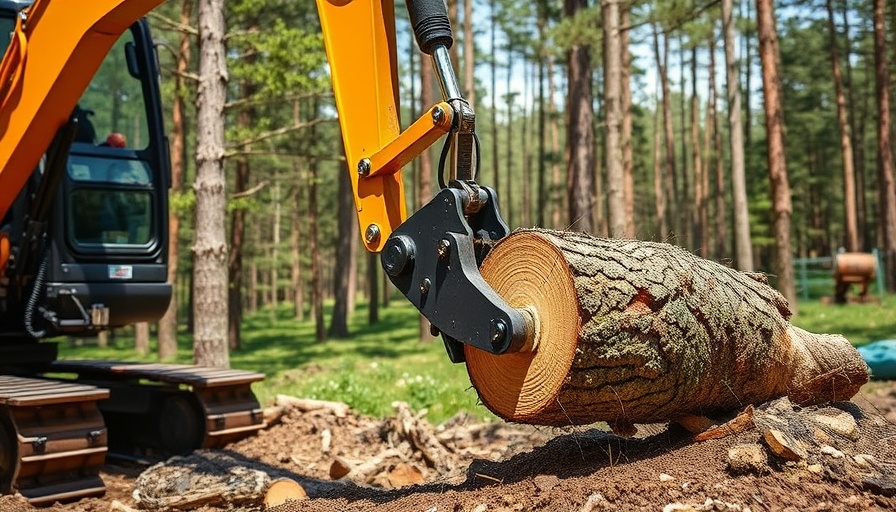
Excavator attachment clearing land, cutting through tree trunk, wood chips flying.

Excavator Attachments Revolutionizing Land Clearing

For homeowners and business owners looking to undertake land clearing projects, the right equipment can make a remarkable difference. With advancements in technology and design, today's excavator attachments enable users to slash through dense vegetation, clear debris, and prepare land for various purposes more efficiently than ever before. Whether you’re managing a home garden or overseeing a commercial landscaping project, consider these innovative attachments that can transform your land clearing experience.

Explore Powerful Mowers and Mulchers

The Blue Diamond Attachments have introduced a new line of excavator drum mulchers designed for harsh conditions. These attachments can tackle large trees with ease, boasting cutting capacities from 4 to 7 inches in diameter. With models ranging from Heavy Duty to Severe Duty, they provide flexibility and efficiency for different user needs, compatible with excavators from 4 to 20 metric tons. Also noteworthy is the Mongo ProGrade forestry mulcher, which utilizes bite-limiting technology to produce finely shredded material while maintaining optimal performance at low hydraulic flow rates.

Exceptional Features of Disc Mulchers

The Bobcat Disc Mulcher brings advanced technology to skid-steer and compact track loaders, achieving powerful cuts on trees up to 14 inches thick. This attachment not only reduces bulky brush to mulch but is also designed for easy operation with fixed, hardened-steel teeth that maximize cutting efficiency. Similarly, Virnig’s X30 Mini Excavator Rotary Brush Cutter presents options for maintenance of smaller vegetation, assisting operators with unique design features that promote control over debris during cutting operations.

Sustainable Options for Environmentally Conscious Clearing

Sustainability is becoming increasingly vital in land clearing, and the Seppi E20 direct forestry mulcher exemplifies this shift. Designed from the ground up to be efficient in both power usage and maintenance, the E20 supports environmental management tasks. Its capability to mulch vegetation up to 7.8 inches reinforces the idea that effective land management doesn't have to come with an environmental cost.

Choosing the Right Equipment for Your Project

As a homeowner or business owner, it’s essential to choose equipment that matches the scale and demands of your project. Understanding the capacities and efficiencies of your options can save time and resources. Be mindful of the cutting width, diameter capacity, and hydraulic requirements of the attachments when making a selection. Whether you are clearing a small yard or a larger landscape, there are specialized tools available that can help you achieve your goals with ease.

Making Informed Decisions

Empowering oneself with the knowledge of what tools are available can significantly enhance your land clearing projects. Remember to consider factors like attachment compatibility with your excavator, the specific vegetation you'll be clearing, and the conditions of the terrain. With the right insights, you can confidently proceed with your landscaping aspirations.

Are you planning a landscaping project? Explore local suppliers to find these attachments and elevate your land clearing experience to the next level!

Trendsetters

31 Views

0 Comments

Write A Comment

*
*
Please complete the captcha to submit your comment.
Related Posts All Posts
07.04.2026

How to Prepare Your Turf for July 4th Crowds: Essential Tips

Update The Importance of Preparing Turf for Celebratory Events As July 4th approaches, event managers and groundskeepers are crucial in ensuring venues are ready for large crowds. The potential impact of thousands of feet on the turf can be significant, affecting both aesthetics and health. Proper preparation not only enhances the experience for attendees but also preserves the landscape for future use, making it essential for homeowners and business owners to understand the behind-the-scenes tactics of turf management. Essential Practices for Turf Management Prior to mass gatherings, turf managers engage in best practices to safeguard the grass. Aerating the soil is often the first step, allowing air, water, and nutrients to reach the roots more effectively. This process strengthens the lawn and prepares it for the pressure of foot traffic. Other techniques may include overseeding with resilient grass species and ensuring the turf remains well-watered to maintain its vitality through heavy use. Homeowners planning outdoor events can adopt similar practices, promoting healthier and more resistant grass. Tips to Maintain a Comfortable Outdoor Environment Comfort is key during summer events. While turf managers focus on the grass, homeowners and business owners should consider additional factors that enhance guest experiences. This includes providing shade with tents or trees, ensuring ample seating, and creating pathways that minimize direct foot traffic on grass. These elements not only cater to attendance comfort but also reduce turf damage, contributing to long-term lawn health. Future Trends in Turf Management for Crowds Looking ahead, the approach to turf management may evolve as technology and eco-conscious practices become more widespread. Innovations such as soil sensors that monitor moisture levels or treatments using organic fertilizers are already gaining traction. For property owners, staying informed about these trends can facilitate proactive planning and enhance their landscape’s resilience against the stress of high foot traffic. Engaging Community Resources Homeowners and business owners can benefit from local resources, such as gardening workshops or consultations with landscape professionals. These tools provide not only knowledge but also community engagement, fostering a deeper appreciation for well-managed landscapes. Utilizing local expertise can be a game changer in maximizing turf quality and event success. Conclusion and Call to Action As we gear up for July 4th celebrations, understanding how to prepare and maintain turf is vital for any property owner hosting large gatherings. Implementing these practices and staying informed about landscaping trends can preserve your outdoor spaces for enjoyment year-round. Don’t wait until the last minute—take action now to ensure your turf is ready for the crowds!

07.03.2026

Why Soil Testing is Essential for Thriving Landscapes

Update Unlocking Soil Secrets: Why Testing is Essential As homeowners and business owners strive for lush landscapes and thriving gardens, understanding the foundation beneath our feet—the soil—has never been more crucial. Soil testing is not merely a scientific formality; it is an indispensable tool for ensuring that your gardening and landscaping efforts lead to spectacular results. By analyzing soil samples, you can uncover insights about nutrient content, pH levels, and organic matter, all of which dictate plant health and growth potential. The Benefits of Soil Testing Conducting regular soil tests provides numerous benefits, turning guesswork into informed decision-making. For instance, it aids in optimizing fertilizer applications—ensuring you spend money wisely while preventing overuse that could harm the environment. Understanding the nutrient levels present allows homeowners to select not only the right crops but also the most suitable lawn and garden plants for their unique soil conditions. This proactive approach enhances soil health and, consequently, the aesthetics of your property. Common Misconceptions about Soil Testing Many believe that soil testing is only necessary for large-scale farming operations. This is far from the truth! Even small gardens and residential lawns benefit from understanding their soil conditions. Skipping soil tests can result in inefficient fertilizer use, poor plant health, and an unattractive landscape. Imagine pouring money into seeds and fertilizers only to find out that your soil is deficient or imbalanced. By giving soil the attention it deserves, you can avoid these pitfalls and create the vibrant spaces you envision. Getting Started with Soil Testing Initiating soil testing is simple and achievable. First, choose a reliable method for collecting soil samples. Whether using a home testing kit or sending samples to a professional lab, the key is consistency in how and where you collect the samples. Ensure to gather soil from multiple locations to get an accurate representation of your garden or yard. The results will reveal necessary corrective measures that could help transform your outdoor space into your dream landscape. Expert Insights: The Science Behind Soil Soil testing goes beyond just analyzing nutrient levels; it reveals the biological, chemical, and physical conditions of your soil. Experts emphasize that healthy soil is vital for successful plant growth. Without knowing what your soil needs, you might be compromising the potential for a thriving garden. A professional soil test can bring forward actionable insights—the kind of information that empowers you to take control of your landscape's health. Your Action Plan: Why Timing Matters Timing your soil test is essential for leveraging its full benefits. It’s recommended to test after harvest seasons or in early spring before planting, allowing homeowners to make informed nutrient decisions. The actionable results from soil tests inform when and how much fertilizer to apply, setting you on the path to a flourishing garden. In conclusion, soil testing is a simple yet powerful tool that can significantly enhance your gardening and landscaping efforts. If you've spent tirelessly caring for your green spaces, it's worth the investment to understand what lies beneath the surface. Embrace soil testing today to cultivate a vibrant, sustainable environment for tomorrow. For more tips on enhancing your landscaping and ensuring a healthy garden, don’t hesitate to contact a local agricultural extension office. They can provide you with the resources you need to help your lawn and garden thrive.

07.02.2026

Discovering the Wood Wide Web: Are You Listening to Trees?

Update Unearthing the Secrets of Tree CommunicationFor many homeowners and business owners, trees are often seen simply as decorative elements in landscaping or shade-providing entities in yards. However, recent scientific discoveries have unveiled an intricate world beneath our feet, where trees engage in communication, resource sharing, and mutual support through complex underground networks. This 'wood wide web' — comprised of mycorrhizal fungi — represents a significant ecosystem service that holds profound implications for environmental health and resilience.What Is the 'Wood Wide Web'?The term 'wood wide web' refers to the networks of mycorrhizal fungi that connect the roots of various trees and plant species, enabling them to communicate and share resources. Studies, including those led by prominent ecologists like Suzanne Simard, have shown that trees can send distress signals, share nutrients, and possibly warn each other of impending threats from pests or diseases.Fungal threads intertwine with tree roots, forming a symbiotic relationship where trees donate sugars produced through photosynthesis in exchange for essential nutrients and water. This mutualistic arrangement is crucial for tree health, particularly in stressful environmental conditions.Why Homeowners Should CareUnderstanding the dynamics of tree communication can influence landscaping decisions and tree management practices significantly. Choose native trees and plants that thrive in your local ecosystem; they’re more likely to form strong relationships with native fungi, enhancing their growth and survival. By enriching natural habitats through strategic landscaping, property owners can contribute to a healthier ecological environment.Practical Insights for Tree CareHomeowners can take actionable steps to support these underground networks:Minimize soil disturbance: Avoid heavy machinery or deep digging that can damage root systems and the associated fungi.Plant diversely: Incorporating a variety of tree species can support a diverse fungal network, creating a more resilient ecosystem.Water wisely: Maintain moisture in the soil, as healthy fungi thrive in well-hydrated environments, promoting tree health.The Bigger Picture: Climate Change and Forest ResilienceAs climate change poses threats to forests, enhancing the resilience of these ecosystems becomes imperative. The mycorrhizal networks — thriving beneath the surface — allow trees to share resources during droughts or pestilence, essential for survivability. By fostering a deeper understanding of tree communication and health, local communities can actively work towards sustaining their landscapes.The Responsibility of Tree StewardshipInvesting in tree care is not just about aesthetics; it also plays a crucial role in environmental stewardship. Homeowners and business owners can lead by example, ensuring that their tree planting and care practices prioritize fostering vibrant ecosystems. Through community awareness and education on the interconnectedness of trees, we can spur actions that protect these vital networks for future generations.

Terms of Service

Privacy Policy

Core Modal Title

Sorry, no results found

You Might Find These Articles Interesting

T
Please Check Your Email
We Will Be Following Up Shortly
*
*
*

