






Luxury Landscaping Insider
update
Luxury Landscaping Insider
update
  • Home
  • Categories
    • Trendsetters
    • Design Dialogues
    • Transformation Tales
    • DIY Luxe
    • Material Mastery
    • Budget to Bliss
    • Event Spotlight
    • Luxury Landscaping Blog
    • Product Reviews
SUBSCRIBE TO NEWSLETTER  
  • update
  • update
  • update
  • update
  • update
  • update
  • update
April 05.2025
2 Minutes Read

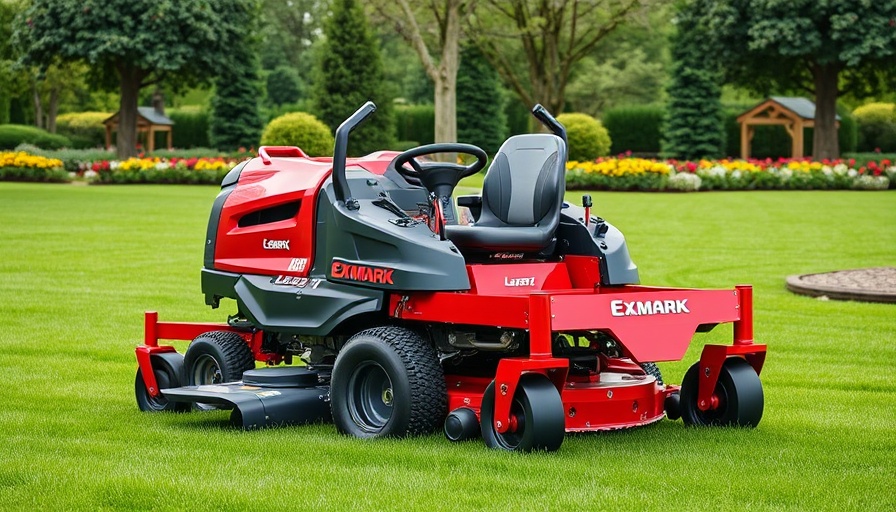
Discover the 2025 Exmark Lazer Z E-Series Zero-Turn Mower: Affordable Power & Comfort

Exmark Lazer Z E-Series zero-turn mower on green lawn

Revamping the Landscape: Meet Exmark's 2025 Lazer Z E-Series Zero-Turn Mower

Exmark has unveiled a completely redesigned version of its popular Lazer Z E-Series Zero-Turn Mower for 2025, setting new standards for commercial landscaping equipment. This model is not only the most affordable entry in Exmark's renowned Lazer Z family but also boasts a host of features aimed at enhancing performance and user experience.

Quality Meets Affordability

With an emphasis on providing value without sacrificing quality, the Lazer Z E-Series reflects Exmark’s 30 years of innovation since its initial launch in 1995. During a recent announcement, Exmark Director of Marketing Jamie Briggs elaborated that the new model caters specifically to customers looking for commercial mowers that deliver reliability, performance, and premium cut quality at an accessible price point.

Engine Choices That Lead the Pack

The latest E-Series model is available with either Kawasaki or Vanguard commercial V-twin engines, making it the most powerful iteration of the Lazer Z E-Series yet. These engines are equipped with heavy-duty canister-style cyclonic air filtration systems, which not only maximize performance but also significantly reduce maintenance demands. This means you can focus more on jobs and less on upkeep during the mowing season.

Enhanced Comfort for Operators

Understanding the needs of landscaping professionals, Exmark has integrated a new suspension seat into their E-Series design, fostering increased comfort during long hours of operation. Furthermore, the mower incorporates a newly redesigned unibody frame that improves access for maintenance tasks, allowing you to spend less time on upkeep and more time getting work done efficiently.

Innovative Cutting Decks for a Cleaner Finish

The customizable cutting decks—available in 48-, 52-, or 60-inch sizes—are engineered for various mowing conditions, whether for residential yards or expansive commercial landscapes. The enhanced discharge chute design allows for better clipping distribution, resulting in neater, professional-grade finishes and reduced lawn cleanup.

Why This Matters to Homeowners and Business Owners

For both homeowners and landscape business owners, investing in high-quality equipment isn't just about efficiency; it's about achieving the best results while minimizing costs. The Lazer Z E-Series not only ensures that grass is cut evenly and cleanly but also gives operators peace of mind knowing they have a reliable machine that requires minimal maintenance. This balance of productivity, comfort, and cost-effectiveness sets the Lazer Z E-Series apart in a competitive market.

Take Action: Elevate Your Landscaping Game

If you’re a homeowner looking to enhance your lawn care routine or a business owner seeking to improve your team's efficiency, consider the Exmark Lazer Z E-Series for 2025. With its combination of power, comfort, and cost-effectiveness, it may very well be the tool you need to elevate your landscaping experience.

Trendsetters

42 Views

0 Comments

Write A Comment

*
*
Please complete the captcha to submit your comment.
Related Posts All Posts
07.03.2026

Why Soil Testing is Essential for Thriving Landscapes

Update Unlocking Soil Secrets: Why Testing is Essential As homeowners and business owners strive for lush landscapes and thriving gardens, understanding the foundation beneath our feet—the soil—has never been more crucial. Soil testing is not merely a scientific formality; it is an indispensable tool for ensuring that your gardening and landscaping efforts lead to spectacular results. By analyzing soil samples, you can uncover insights about nutrient content, pH levels, and organic matter, all of which dictate plant health and growth potential. The Benefits of Soil Testing Conducting regular soil tests provides numerous benefits, turning guesswork into informed decision-making. For instance, it aids in optimizing fertilizer applications—ensuring you spend money wisely while preventing overuse that could harm the environment. Understanding the nutrient levels present allows homeowners to select not only the right crops but also the most suitable lawn and garden plants for their unique soil conditions. This proactive approach enhances soil health and, consequently, the aesthetics of your property. Common Misconceptions about Soil Testing Many believe that soil testing is only necessary for large-scale farming operations. This is far from the truth! Even small gardens and residential lawns benefit from understanding their soil conditions. Skipping soil tests can result in inefficient fertilizer use, poor plant health, and an unattractive landscape. Imagine pouring money into seeds and fertilizers only to find out that your soil is deficient or imbalanced. By giving soil the attention it deserves, you can avoid these pitfalls and create the vibrant spaces you envision. Getting Started with Soil Testing Initiating soil testing is simple and achievable. First, choose a reliable method for collecting soil samples. Whether using a home testing kit or sending samples to a professional lab, the key is consistency in how and where you collect the samples. Ensure to gather soil from multiple locations to get an accurate representation of your garden or yard. The results will reveal necessary corrective measures that could help transform your outdoor space into your dream landscape. Expert Insights: The Science Behind Soil Soil testing goes beyond just analyzing nutrient levels; it reveals the biological, chemical, and physical conditions of your soil. Experts emphasize that healthy soil is vital for successful plant growth. Without knowing what your soil needs, you might be compromising the potential for a thriving garden. A professional soil test can bring forward actionable insights—the kind of information that empowers you to take control of your landscape's health. Your Action Plan: Why Timing Matters Timing your soil test is essential for leveraging its full benefits. It’s recommended to test after harvest seasons or in early spring before planting, allowing homeowners to make informed nutrient decisions. The actionable results from soil tests inform when and how much fertilizer to apply, setting you on the path to a flourishing garden. In conclusion, soil testing is a simple yet powerful tool that can significantly enhance your gardening and landscaping efforts. If you've spent tirelessly caring for your green spaces, it's worth the investment to understand what lies beneath the surface. Embrace soil testing today to cultivate a vibrant, sustainable environment for tomorrow. For more tips on enhancing your landscaping and ensuring a healthy garden, don’t hesitate to contact a local agricultural extension office. They can provide you with the resources you need to help your lawn and garden thrive.

07.02.2026

Discovering the Wood Wide Web: Are You Listening to Trees?

Update Unearthing the Secrets of Tree CommunicationFor many homeowners and business owners, trees are often seen simply as decorative elements in landscaping or shade-providing entities in yards. However, recent scientific discoveries have unveiled an intricate world beneath our feet, where trees engage in communication, resource sharing, and mutual support through complex underground networks. This 'wood wide web' — comprised of mycorrhizal fungi — represents a significant ecosystem service that holds profound implications for environmental health and resilience.What Is the 'Wood Wide Web'?The term 'wood wide web' refers to the networks of mycorrhizal fungi that connect the roots of various trees and plant species, enabling them to communicate and share resources. Studies, including those led by prominent ecologists like Suzanne Simard, have shown that trees can send distress signals, share nutrients, and possibly warn each other of impending threats from pests or diseases.Fungal threads intertwine with tree roots, forming a symbiotic relationship where trees donate sugars produced through photosynthesis in exchange for essential nutrients and water. This mutualistic arrangement is crucial for tree health, particularly in stressful environmental conditions.Why Homeowners Should CareUnderstanding the dynamics of tree communication can influence landscaping decisions and tree management practices significantly. Choose native trees and plants that thrive in your local ecosystem; they’re more likely to form strong relationships with native fungi, enhancing their growth and survival. By enriching natural habitats through strategic landscaping, property owners can contribute to a healthier ecological environment.Practical Insights for Tree CareHomeowners can take actionable steps to support these underground networks:Minimize soil disturbance: Avoid heavy machinery or deep digging that can damage root systems and the associated fungi.Plant diversely: Incorporating a variety of tree species can support a diverse fungal network, creating a more resilient ecosystem.Water wisely: Maintain moisture in the soil, as healthy fungi thrive in well-hydrated environments, promoting tree health.The Bigger Picture: Climate Change and Forest ResilienceAs climate change poses threats to forests, enhancing the resilience of these ecosystems becomes imperative. The mycorrhizal networks — thriving beneath the surface — allow trees to share resources during droughts or pestilence, essential for survivability. By fostering a deeper understanding of tree communication and health, local communities can actively work towards sustaining their landscapes.The Responsibility of Tree StewardshipInvesting in tree care is not just about aesthetics; it also plays a crucial role in environmental stewardship. Homeowners and business owners can lead by example, ensuring that their tree planting and care practices prioritize fostering vibrant ecosystems. Through community awareness and education on the interconnectedness of trees, we can spur actions that protect these vital networks for future generations.

07.01.2026

Summer Landscape Maintenance Tips to Keep Your Bergen County Yard Luxurious

Update Essential Summer Strategies for Bergen County Yards Summer may paint a picturesque image of vibrant gardens and lush lawns in Bergen County, but the reality is that it’s a battleground for homeowners striving to keep their outdoor spaces in top shape. The combination of high temperatures, humidity, and potential drought can be particularly taxing on even the most well-maintained landscapes. Understanding how to adapt your summer care can ensure that your yard stays not just alive but thriving throughout the season. Why Summer Poses Unique Challenges for Landscaping During the hot months of July and August, Bergen County experiences a perfect storm of environmental stressors: intense heat, sporadic rain, and the proliferation of pests. As grass goes dormant and plants struggle to adapt, the need for a well-rounded summer maintenance plan becomes crucial. There are proactive steps you can take to minimize stress on your landscape — focusing on watering, mowing, and pest management will foster a healthy growing environment. Watering Techniques that Nourish and Sustain The foundation of effective summer landscape maintenance is water. It might seem counterintuitive, but watering deeply and less often is the key. This method encourages roots to penetrate deeper into the soil, seeking moisture during drier conditions. Aim for about 1 to 1.5 inches of water weekly, including rainfall, and adjust your irrigation system to operate less frequently but more efficiently. This practice not only conserves water but reinforces your lawn’s resilience against heatwaves. Mowing: The Importance of Height Another common pitfall for homeowners is mowing too short. Cutting your grass to a minimal height exposes roots to harsher conditions and invites a barrage of weeds. Aim to maintain a mowing height of 3.5 to 4 inches, which provides essential shade and retains soil moisture. This simple adjustment can make all the difference between a stressed lawn and a thriving one. Combatting Weeds and Pests with Smart Strategies A critical aspect of summer lawn care also involves staying ahead of weeds and pests. Regularly inspect your plants for signs of distress and intervene promptly. Integrated pest management (IPM) techniques are recommended, combined with strategies that include hand pulling weeds before they mature and using organic pesticides when necessary. Taking this proactive approach can protect beautified landscapes from becoming a banquet for unwelcome guests. The Personal Touch: Transforming Your Outdoor Space Landscaping is not just about keeping your yard alive; it’s about creating an inviting outdoor environment where memories are made. By devoting time to maintain your landscaped areas, you can transform your yard from a functional space into a luxurious retreat. Implementing these recommended strategies ensures that your Bergen County home maintains its grandeur, no matter the challenges presented by the summer heat.

Terms of Service

Privacy Policy

Core Modal Title

Sorry, no results found

You Might Find These Articles Interesting

T
Please Check Your Email
We Will Be Following Up Shortly
*
*
*

