






Add Row
Add Element
Luxury Landscaping Insider
update
Luxury Landscaping Insider
update
Add Element
  • Home
  • Categories
    • Trendsetters
    • Design Dialogues
    • Transformation Tales
    • DIY Luxe
    • Material Mastery
    • Budget to Bliss
    • Event Spotlight
    • Luxury Landscaping Blog
    • Product Reviews
SUBSCRIBE TO NEWSLETTER  
  • update
  • update
  • update
  • update
  • update
  • update
  • update
May 03.2025
2 Minutes Read

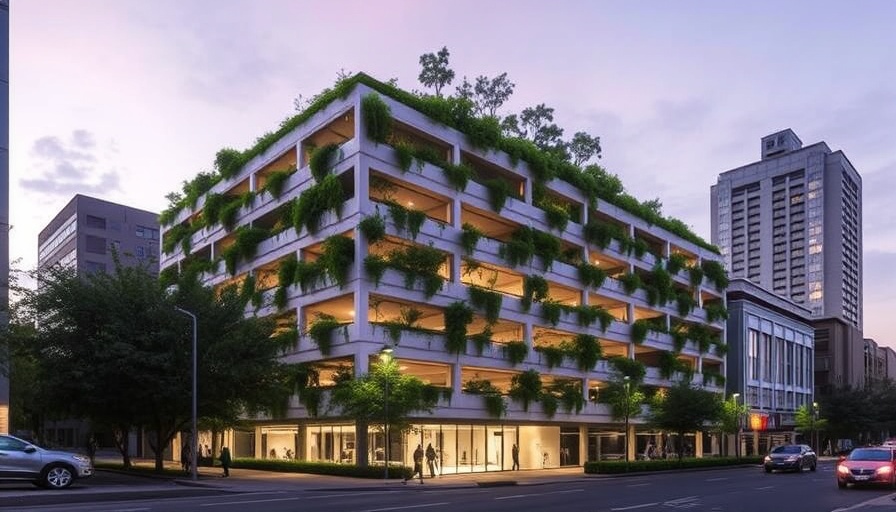
Exploring the Green Revitalization: ODA Converts Garage into Park-Covered Building

ODA converts parking garage into park-covered building in Buenos Aires

Transforming Buenos Aires: From Parking Garage to Green Haven

In a remarkable transformation, architecture studio ODA has turned a dilapidated parking garage in Buenos Aires into a vibrant mixed-use building known as OLA Palermo. This innovative design captures the essence of community connection by extending green space and rejuvenating a previously overlooked area.

Embracing History While Creating the Future

Constructed originally to serve a horse racing venue, the parking structure utilized a standard slab-and-column layout that was repurposed by ODA to create an inviting atmosphere. Interestingly, the architects managed to preserve around 80 percent of the original elements, retaining the garage's historical value while infusing modern functionality. Founding principal Eran Chen emphasized the studio's commitment to not merely erase the past, but to enhance it in a way that celebrates the building's heritage.

A Green Roof to Connect City Life

The redevelopment brought in lush green spaces atop the building. A gently sloping green roof now offers a beautiful link to the surrounding parks, inviting residents and visitors to utilize this space for relaxation and socialization. The inclusion of landscaping elements such as seating and public art makes it not just a functional area but a community hub.

Citizen-Centric Design: The Community's Playground

The ambitious project was realized through a public-private partnership, showcasing a model that aligns private development initiatives with community needs. Álvaro García Rest, head of the city’s urban development, asserted that projects like OLA Palermo play a crucial role in repurposing underutilized urban landscapes, turning abandoned concrete into dynamic green spaces.

Local Craftsmanship Meets Sustainability

More than just aesthetics, ODA focused on incorporating local materials and labor into the design. Utilizing stone, wood, and unique concrete finishes, the interiors resonate warmth and a sense of community. This choice not only supports the local economy but also creates environments that feel human-scale, inviting interaction and connection.

A Vision for Future Urban Spaces

As cities worldwide face the challenge of balancing development and green spaces, OLA Palermo stands as an inspiring example. It emphasizes the importance of narratives in urban development where integrative designs can foster connections within neighborhoods. The innovative approach taken by ODA may set new trends in urban spaces, encouraging city planners and developers to reconsider how forgotten structures can be transformed into thriving community assets.

With every green space added to urban areas, the potential for healthy, connected communities grows. As homeowners and business owners, embracing such developments not only enhances property values but also enriches the quality of life for everyone involved.

Join the conversation about the future of urban landscaping. How can similar transformations be inspired in your city? Let’s champion local initiatives and engage with community projects that prioritize sustainability and connectivity.

Trendsetters

23 Views

0 Comments

Write A Comment

*
*
Please complete the captcha to submit your comment.
Related Posts All Posts
04.17.2026

Yanmar's New CTLs with Posi-Track: A Game Changer for Homeowners & Businesses

Update Yanmar’s New Compact Track Loaders Represent a Strategic Shift This fall, homeowners and business owners across North America will witness a significant evolution in the compact equipment sector as Yanmar unveils its two new compact track loaders (CTLs), TL25RP and TL50RP. This launch marks the culmination of Yanmar’s strategy to consolidate the ASV brand into a singular ‘One Yanmar’ identity, as part of their efforts to streamline market presence and enhance customer experience. Embracing Heritage While Innovating Yanmar's decision to phase out ASV-branded compact loaders follows its acquisition of ASV in 2019 and aligns with the company's vision of integrating the strengths of both brands. Peter Ovrebo, Yanmar's director of product management, emphasized that while transitioning to Yanmar’s branding and color scheme, the company will honor ASV’s legacy by retaining its innovative Posi-Track undercarriage system. The Posi-Track system, known for its flexibility, traction, and superior performance in challenging terrains such as soft, wet, and hilly surfaces, will continue to play a vital role in this product line. This adaptation not only preserves ASV's technical prowess but also aligns with Yanmar’s commitment to delivering high-quality machinery to contractors and landscape professionals. Product Specs and New Offerings The TL25RP and TL50RP compact track loaders feature advanced technology paired with Yanmar's reputable diesel engines. The TL25RP is designed for light-duty landscaping with a horsepower of 23.2, while the more robust TL50RP offers 53.8 horsepower, catering to more demanding operational needs. Both models provide options for ROPS open canopies or fully enclosed cabs, ensuring versatility for varying job site conditions. Yanmar aims to fill out its lineup with additional models in the future, reinforcing their commitment to the compact track loader market, which has become increasingly significant for construction and landscaping industries in the U.S. The Future of Compact Equipment This strategic merge is not just a branding exercise; it’s a calculated move to enhance market leadership in the highly competitive compact equipment space. Yanmar plans significant investments of $30 million over the next five years to expand CTL engineering capabilities and production capacity at its Grand Rapids facility. This investment aims not only to gear up production but also to foster innovation in new machining technologies. As part of the ‘One Yanmar’ initiative, the company actively simplifies its product narrative, presenting a cohesive story to customers and dealers alike—a narrative that promises enhanced performance and reliability across its compact equipment offerings. Importance of Understanding Equipment Options For homeowners and business owners considering investments in landscaping and construction machinery, understanding the variety and capabilities of new loaders is crucial. The ongoing transition to Yanmar CTLs offers a unique opportunity to benefit from enhanced machinery options driven by innovation. As the market for compact track loaders continues to flourish, being armed with knowledge about product features and industry trends can lead to smarter investments that support both residential landscaping needs and commercial landscaping enterprises. As Yanmar continues to roll out these new compact track loaders, operators will need to remain informed about the benefits of Posi-Track technology versus traditional steel-embedded track systems to choose the best loader for their specific applications. Stay Ahead of the Curve For those in the landscaping and construction fields, understanding the evolving market landscape is vital. For insights on machinery choices and industry trends, keep exploring resources and news. Transitioning to the Yanmar brand may also echo a growing trend in equipment consolidation, making it all the more necessary for professionals to stay informed and engaged.

04.18.2026

Energy Reliability Risk: What Turf Professionals Must Know

Update The Emerging Risk of Energy Reliability in Turf Management As commercial landscape operations are evolving, a seismic shift is occurring beneath the surface: energy reliability is quickly becoming a critical aspect of day-to-day turf management. Given the increasing strain on the power grid and the corresponding uptick in outages, turf businesses are faced with mounting operational risks. This trend is not merely a background issue; it's a concern that turf professionals can no longer afford to ignore. Understanding the Impact of Power Disruptions Power outages can significantly disrupt turf operations, leading to delayed schedules and damaged equipment. For instance, irrigation systems powered by electricity are vital for maintaining lush, healthy landscapes. When there’s a blackout, not only does it halt irrigation cycles, but it can also lead to costly damages that are often compounded by industry downtime. Reliable access to electricity is foundational for keeping operations running smoothly, making energy planning essential for business continuity. Strategies for Operational Resilience The challenge of maintaining operational flow in the face of unreliable energy sources can be daunting, yet practical approaches can help. One effective strategy is to invest in backup power solutions. This could include battery systems or generators tailored to meet the specific energy needs of turf management operations. Preparing in advance can significantly reduce the risk associated with power disruptions and position businesses as reliable partners for clients who prioritize consistency and service quality. The Clients' Demand for Reliability In today’s landscape, clients—including municipalities and commercial properties—are placing increasing emphasis on reliability and risk mitigation. For turf professionals, being proactive about energy reliability not only fulfills client expectations but also enhances their service offerings. When turf companies can assure clients of uninterrupted operations, they differentiate themselves in a competitive market, thus strengthening their business standing. The Importance of Energy Planning Effective energy planning encompasses several facets, from understanding how outages affect critical systems to implementing backup strategies. Turf professionals can prioritize essential systems to minimize risks during energy disruptions. This not only increases operational efficiency but also provides peace of mind in an unpredictable energy landscape. With growing pressure on the power grid, adopting proactive energy management practices becomes paramount for success in the industry. Your Resource for Staying Prepared To further assist turf professionals in this dynamic environment, the Turf Magazine has released a comprehensive downloadable resource: How Energy Reliability Is Becoming a Turf Industry Risk. This guide delves into the crux of the increasing energy challenges faced by the turf industry while offering practical solutions tailored to common operational hurdles. It's essential reading for any business looking to thrive amidst these challenges. Conclusion: Take Action to Secure Your Operations In an era of unreliable energy, the time is now for turf professionals to take action. By downloading Turf Magazine's guide, you are not just preparing for outages but also enhancing your business’s resilience against an uncertain future. Equip yourself with the knowledge and strategies that will help you maintain seamless operations, even when conditions become challenging. Don't let energy reliability become an afterthought; make it a priority for your operations and your clients’ peace of mind.

04.17.2026

Discover the Best Plants for Erosion Control on Slopes Today

Update Why Erosion Control Plants Matter When it comes to landscaping sloped areas, choosing the right plants is essential for more than just aesthetics. Homeowners and business owners alike need to confront the very real threat of soil erosion, especially in regions that experience heavy rainfall. The strong and deep-rooted plants serve as a critical safeguard for the soil, preventing runoff and ensuring the stability of your landscape. The Best Characteristics of Erosion Control Plants Effective erosion control plants typically share several key characteristics: Deep or fibrous root systems: Such roots anchor the soil firmly in place. Spreading growth: Plants that spread outwards offer dense coverage, which helps slow down rainwater and reduce erosion. Drought tolerance: Once established, these plants typically withstand periods of low rainfall, ensuring longevity and sustainability. Adaptability: The ability to thrive in varying conditions—be it sun, shade, or different soil types—is crucial for success. Top Plant Selections for Effective Erosion Control Here's a curated mix of the best plants known for effective erosion control: 1. Groundcovers for Rapid Coverage Creeping Juniper: An evergreen and hardy choice, this plant offers durability with a lovely aesthetic. Pachysandra: Thrives in shaded slopes, ideal for maintaining soil stability even in less-than-ideal light conditions. Creeping Phlox: Beyond its stabilizing qualities, this plant brings seasonal colors to your landscape. 2. Grasses for Deep Root Systems Switchgrass: A native option that not only stabilizes soil but also adds beauty with its elegant plumes. Blue Fescue: This low-maintenance grass is perfect for confined spaces while preventing soil erosion. 3. Shrubs for Strength and Structure Incorporating shrubs into your landscape design adds much-needed strength: Juniper Shrubs: Hardy and resilient, perfect for tough environments. Spirea: Adaptable and visually appealing, providing structure while reinforcing soil integrity. 4. Layering for Maximum Effectiveness Using a combination of these plants not only helps slow water runoff but also reinforces soil stability at multiple levels. A strategy that involves layering different types of vegetation will protect against erosion while creating a visually dynamic landscape. Practical Tips for Planting on Slopes For a truly effective erosion control strategy, consider these practical insights: Planting density: Dense planting fills gaps that could otherwise be exposed to erosion. Follow the contour: Align plantings with the natural slope contours rather than in straight lines to disrupt water flow efficiently. Embrace Your Landscape with Erosion Control By selecting the right plants for erosion control on slopes, you're investing in the longevity and beauty of your property. But remember, while these strategies are effective, early installation is critical to achieving the best results. Ready to enhance your landscape with expert guidance? Reach out to landscaping professionals who can help ensure your project is a success. Discover the potential of your outdoor space!

Terms of Service

Privacy Policy

Core Modal Title

Sorry, no results found

You Might Find These Articles Interesting

T
Please Check Your Email
We Will Be Following Up Shortly
*
*
*

